

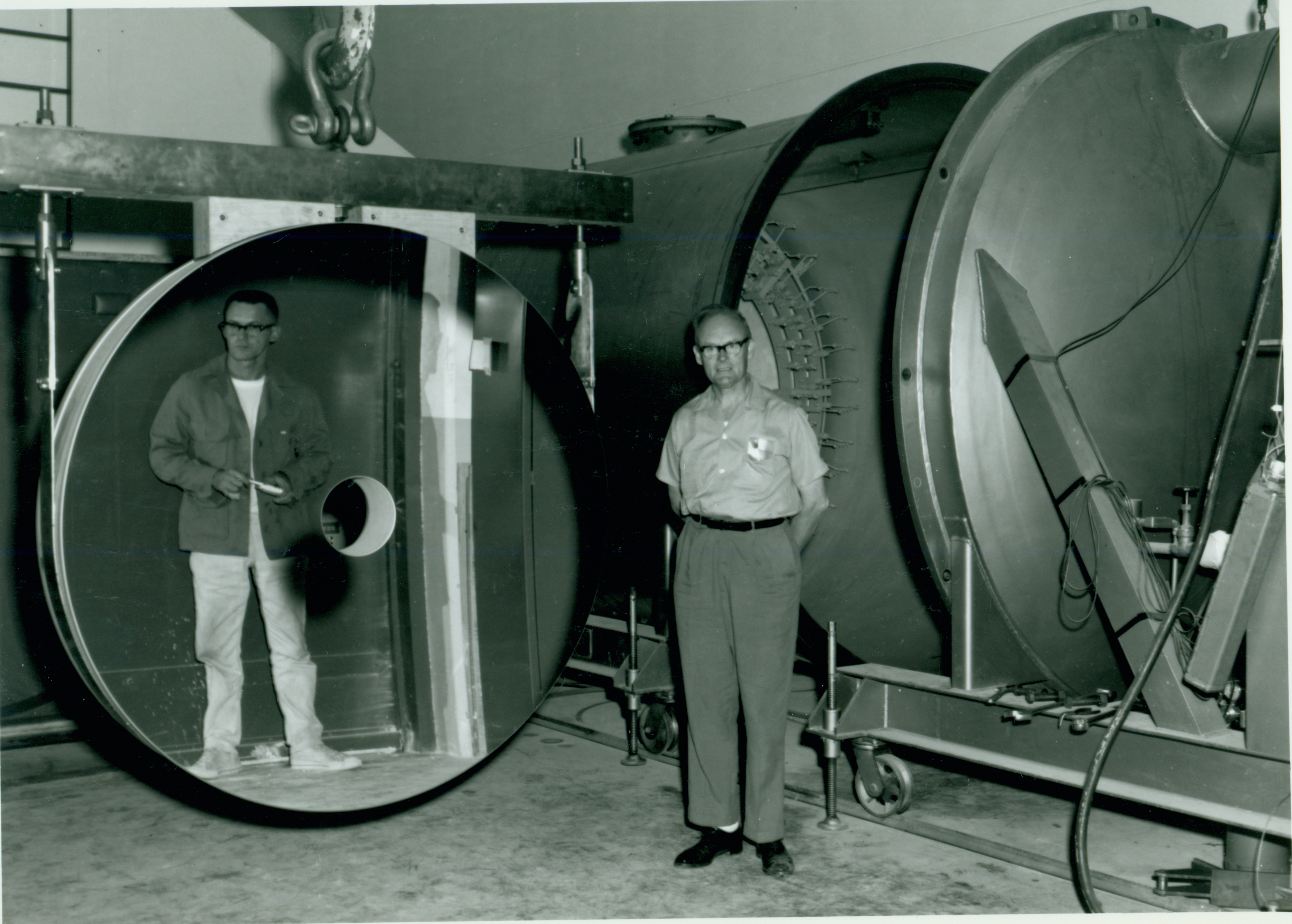
William Hartmann
I came in ’61, when LPL was located in the Physics, Math, and Meteorology Building, PMM. A group of us were located not in PMM but in a Quonset hut called T6, for Temporary Building Number 6. It was a sort of cylindrical shaped structure, on the present location of the science library. We used to have jokes about Kuiper flying into a tizzy over something and saying “Call T6, call T6,” because a bunch of us graduate students over there were either about to be chewed out or he needed us to do something.
Ewen Whitaker
We started up in very humble surroundings. We had one Quonset hut where the Science Library is now. We started up in this little hut and we set ourselves up there. But at the same time the new Physics and Atmospheric Sciences building—the PMM building it was called in those days, Physics, Maths and Meteorology—had been built and they were just moving in.
The Atmospheric Sciences had got the top floor, the whole top floor, but there was a little piece to the west end there—about the size of a small house—and they said, “Hey, you can have this piece at the end there.”
So we moved into this place from the Quonset huts, and set up our darkrooms and got on with the work of the Lunar Atlas. There’s how it all started. We started off in very modest form with just the six of us.
William Hartmann
At that time if you went into the Steward Observatory library, which I remember doing a lot, and you looked on the shelves, a lot of the astronomical literature was in publications from individual observatories. This was a tradition going back to the 1800s or so, because in those days there weren’t widespread and reliable series of journals. This was typically a European tradition, where great laboratories and observatories had their own series of publications that were sent out around the world to other institutions. Certainly some were very old, over a hundred years old, some of them. And Kuiper was still very much in that European tradition.
So observatories tended to publish their own results, sometimes as little booklets, which would be the product of some big survey program that they had been working. Those were circulated among the observatories.
That was a clear tradition, and Kuiper came in with that image in his head, and started up this Communications of the Lunar and Planetary Laboratory series. That was another one of my jobs, actually, being a junior co-editor of that, to help move it along. I’d go over to the printers to deliver copies and bring them back, and sometimes editing, to make sure everything was set up right.
Floyd Herbert
There was a University President in those days, Richard Harvill, who had a lot of ambition for this University. We cheeky graduate students used to make fun of him all the time, but his idea was he was going to make the UA into “The Harvard of the West,” or something like that. So he was very open to creating first-rank departments. People of great ability like Kuiper and Sonett at the Lunar Lab and Aden Meinel at Optical Sciences and the various guys over at Steward would present him with their plans for making their respective departments much more high powered. He was quite supportive of that. That all came from Harvill. He made it all possible.
George Coyne
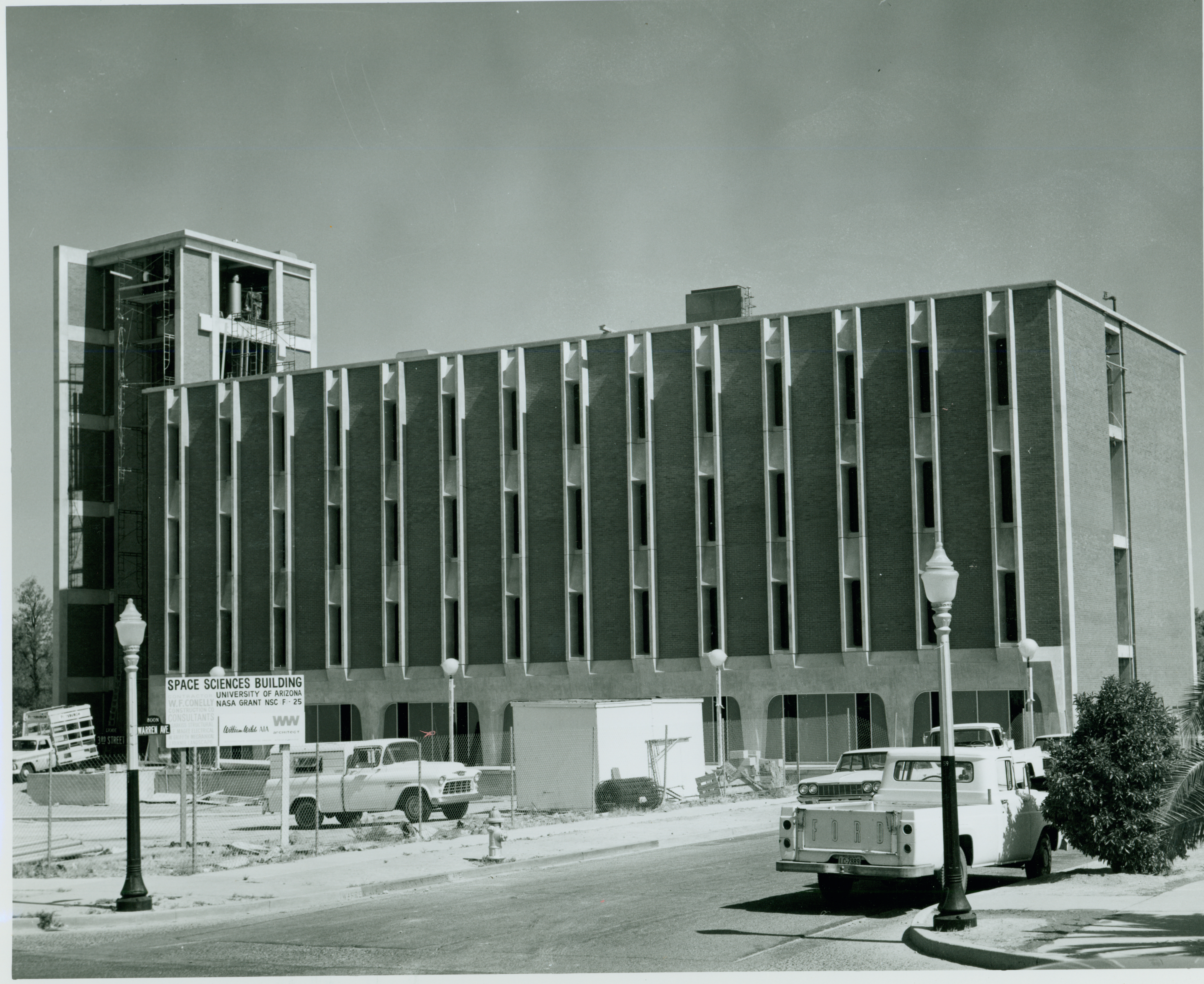
Finally the Space Sciences Building was built [in 1965], and we all moved in there. There was enthusiasm about all the research. Tom Gehrels was extremely active. Elizabeth Roemer is one of the best comet astronomers in the world. The Department was essentially Tom Gehrels, Elizabeth Roemer, Ewen Whitaker, Bob Strom, and then he had a lot of non-faculty positions, a lot of research positions. They were filled by younger people.
Very soon Kuiper built up some real strengths. He hired Frank Low, who was eminent. Frank Low was developing the whole field of infrared astronomy, which from that time became a very important field. In fact, although it was called the Lunar and Planetary Laboratory, a lot of the research there was on non-planetary objects. Frank was there for many years in that Department, in that research group, but he was doing a lot of work on stars, on any kind of infrared source that was significant. The research was really front-line. The whole selection of sites for the Moon, the first landing on the Moon and all—that research group contributed a lot to that program. That was the early years of LPL.
Harold Larson
This building was built by NASA to provide a place in this country for planetary science to be conducted away from astronomers, because astronomers looked down on planetary people. Astronomers didn’t let planetary people have time on telescopes. Astronomers thought that the planets weren’t very interesting and asteroids were worse—stars and galaxies, these were the things that warranted those resources.
NASA of course saw the need to do supporting observations because of the space program that was just coming on line, the Apollo mission to the Moon. Nobody had maps of the Moon; nobody knew what the Moon was made out of. To take pictures and to try to understand more detail of what the Moon was going to be like when we landed on it, NASA created this place.
Kuiper populated it with people like Ewen Whitaker and Bob Strom and Tom Gehrels and Pat Roemer, all of whom were doing things that complemented each other, all of which were deemed important to provide background information for the space program. NASA built a telescope that accompanied the building, which is the 61-inch up in the Catalinas. That was dedicated to planetary work. It was a place in the country where planetary astronomy and supporting planetary research could be conducted without the interference and constraints that typically applied in other institutions where astronomy was king.