Planetary Surfaces
About
Planetary surfaces are influenced by their interior processes (e.g. volcanoes), exterior effects (e.g. impact cratering) and their atmospheres (e.g. wind and rain) and so can be incredibly informative when it comes to figuring out a planet’s history. The decade from the mid-1960s to mid-1970s saw the exploration of much of the inner solar system with the photography of surfaces of the Moon (including its unseen far-side), Mercury and Mars. LPL’s previous work on telescopic mapping of the lunar surface had left it well prepared to play leading roles in most of these missions and the interpretation of the data they returned. In the following decades, LPL continued contributing to the study of planetary surfaces around the solar system with cameras aboard the Mars Pathfinder mission, the Huygens lander on Saturn’s moon Titan and the operation of the Phoenix lander on Mars. The study of these surfaces has also grown in sophistication and now includes analysis of surface composition from remote spacecraft as well as analysis of returned samples here in the laboratory.
Today at Mars, LPL is operating the HiRISE camera aboard Mars Reconnaissance Orbiter, which takes higher resolution images than any camera to fly on a planetary mission. LPL was home to the VIMS instrument on the Cassini spacecraft, which took images in hundreds of different colors to allow the composition of the target to be determined. LPL faculty also have ongoing involvement in numerous other instruments and missions investigating planetary surfaces.
Planetary Surfaces Group Meetings
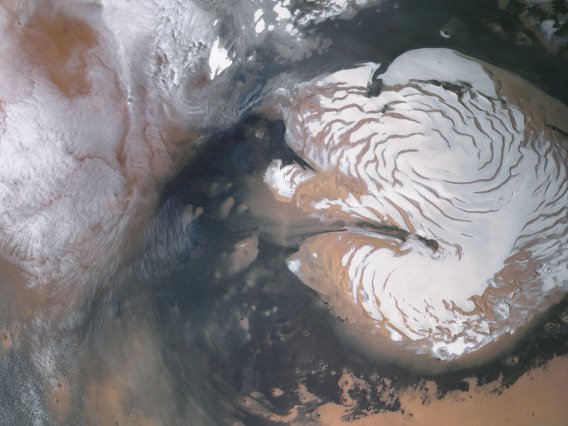
Terrestrial And Planetary Investigations and Reconnaissance (TAPIR)
TAPIR research themes include debris-covered glaciers, terrestrial glaciers and ice sheets, Mars polar studies, and geophysical instrumentation techniques.
Faculty
Planetary Surfaces Faculty









Other Researchers
Planetary Surfaces Researchers


Nathan Hadland
PTYS Graduate Student
Astrobiology, Earth, Planetary Analogs, Planetary Surfaces